Telescopes

A Telescope is an instrument used for viewing objects at very large distances. Celestial Telescopes are used to look at objects in the sky such as the moon and other celestial objects. Terrestrial Telescopes are used view objects on earth such as mountains, ships and buildings located faraway.

Based on their construction, Telescopes can be divided into two categories, viz. reflecting telescopes and refracting telescopes. The Refracting telescope uses lenses while the reflecting telescope uses mirrors. Refracting telescopes are generally for making viewing objects on earth while reflecting telescopes are used for astronomical observations.

Principle of Operation:
A Telescope is constructed using an objective that gathers light from a faraway source and an eye-piece that forms an image that the eye can see. The objective is a lens in case of a refracting telescope or a mirror in case of a reflecting telescope.

The objective gathers the light from the object to be viewed and focuses it on a point. The second lens the eye-piece collects the light from the focal point of the objective and enlarges it. The magnifying power and the resolution of the telescope are dependent on the choice of the lenses

Famous Telescopes:
Telescopes come in a wide range of sizes and shapes. Small ones can be bought from the toy store for a few dollars while large telescopes weigh many tons and cost millions of dollars. Large telescopes such as the Hubble space telescope.

Besides optical telescopes, most modern astronomical observatories have telescopes which collect all types of electromagnetic radiation such as radio waves, ultraviolet light and create images. The Hubble telescope has an aperture size of 2.4 metres. Other notable telescopes include the 5 meter Hale telescope at the Palomar Observatory.

Important terms related to the telescope:
Resolving power of a telescope: The resolving power of a telescope is the ability of the telescope to differentiate between two different points of the image. Telescopes with higher resolving power produce higher quality images.

Magnifying power of the telescope:
This is the ability of the telescope to magnify the image. The magnifying power is the ratio of the focal lengths of the objective lens and the eye-piece. Therefore by varying the eye-piece lens any magnification could be achieved. However, magnification alone does not produce good quality images. Excessive magnification can result in blurred images.

Aperture: An aperture is a small opening that allows the entry of light. In telescopes, the term “aperture” generally refers to the size of the objective lens which collects the light from the distant object.

Tips for Buying a telescope:
Telescopes are popular amongst amateurs interested in astronomy. A good refracting telescope is ideal for making for looking at the sky. While choosing a good telescope, it is important that you look at the size of the aperture or the objective lens along with the magnification. Many people believe that magnification is all that is necessary to obtain a good image. It is also necessary for a telescope to have a good resolution to deliver.

Besides looking at the optics, it is also necessary to look at the mountings of the telescope along with the portability if you plan to make observations from different places. Read More

Petra - City in Stone

Deep in the Jordanian desert, surrounded by towering mountain ranges, lie the ruins of an ancient city that fascinates archaeologists and tourists alike as much with its unique appearance and construction as with its beauty and grandeur. The city is Petra, ancient capital of the Nabateans – a Semitic people. Petra is famous for its buildings – temples, monasteries, churches, amphitheatres that are carved into solid rock.

As remarkable as the ability of the Nabateans to construct buildings out of rock was their creation of a complex system of hydraulic engineering. Located in the middle of a desert and surrounded by mountains, the Nabateans were conscious of the importance and value of water. A complicated system of dams, cisterns, conduits stands testament to the ingenuity of these ancient people. With this clever innovation, water from the flash floods which would ravage the place could be stored for use throughout the year. Water in the desert, being a precious commodity was also traded, bringing in revenue. Thus, Petra was able to transform itself into an artificial oasis in the middle of the desert.

Tradition holds that the earliest known inhabitants of Petra were the Edomites. The Nabateans, scholars hypothesize, invaded the region, displacing the Edomites. Establishing themselves in the region, they managed to hold on despite political turmoil and conflict in their neighborhood. They seem to have been skilful in the art of trade and commerce, taking advantage of the strategic location on ancient commercial routes. For, soon Petra became an important trading post in the fabled spice route. The architecture of the monuments testifies to an influence of many lands. A confluence of native building styles with Greco-Roman architecture produced a grand and imposing style of construction.

The name ‘Petra’ is derived from the Latin word petra which means stone. This was how the city was known to the outside world. It is still unclear what the inhabitants called their city. Scholars believe that the mention of a city called Rekem in the Dead Sea Scrolls refers to Petra.

In 64-63 BC, the Roman General Pompey conquered the Nabateans and Petra came under Roman rule. The Romans, however, allowed the Nabateans to be independent in exchange for tribute. This status continued until 106 AD when the Roman emperor Trajan annexed the region into the Roman Empire. The Romans called the region Arabiae Petrae and retained Petra as its capital. The decline of the city seems to have started a century later. The exact cause for the collapse of Petra is unknown. It is generally believed that a combination of factors such as the development of rival trade centers in the region and external invasions may have been responsible for the decline of this wondrous city. The city all but disappeared from the glare of the outside world until 1812, when the Swiss explorer Johann Ludwig Burckhardt discovered it.

Some of the earliest religious buildings are temples built in honor of local gods and goddesses and deified kings. Christianity reached Petra in the 4th century AD. A number of churches have been discovered. However, it was supplanted by Islam, which reached the region in the 7th century AD.

Efforts are on by the Jordanian Government and UNESCO to preserve this historic treasure for future generations. Petra is currently mentioned on the World Heritage List. Many restoration missions and photogrammatic surveys have been conducted at this site. A comprehensive plan is being designed to protect this site and to develop a sustainable economic model for tourism with the involvement of the local population.

Read More

Louis Pasteur - Father of Microbiology

Louis Pasteur was a French chemist who laid the foundations of modern microbiology. He also revolutionized the life sciences with his radical methods of study and experimentation. He is credited with numerous discoveries and the development of processes such as pasteurization which is widely used for sterilization. However, he is best remembered for his cure of rabies, a dreaded disease which until then meant certain death.

Early Life and Career

Louis Pasteur was born into a poor family in the town of Dole, France on December 27, 1822. His father was a tanner. His early days were spent in the town of Arbois where he attended school. Though he did not excel in school, the headmaster spotted Pasteur’s potential and persuaded his father to send him to Paris for further studies.

Pasteur enrolled in the Ecole Normale Superiere in Paris. He obtained his doctorate in 1847 and became an assistant to a professor. Pasteur’s first brush with fame came when he was only 26 years old when he made a revolutionary discovery on the polarization of light by tartaric acid, an acid found in wine. Pasteur found that the crystals of tartaric acid rotate light in two different directions because the crystals are present in two forms which were mirror images of each other. His findings drew acclaim amongst his peers.

His pioneering work on crystallography was lauded and he was elevated to the post of Professor at the college of Strasbourg. From there he went on to hold many distinguished academic positions in the reputed universities of the time.

He returned in 1856 to his alma mater, the Ecole Normale Superieure as Administrator and Director of Scientific Studies. He later went on to head the Science Faculty at the University of Lille. In 1867, he founded a laboratory for the study of microbes, which came to be known as the Pasteur Institute. It was here that he made the most famous and influential of his discoveries, the cure for rabies – a deadly disease which until then was incurable.

Pasteur’s Discoveries

Pasteur is remembered for first establishing the connection between germs and disease. He sought to apply all his scientific discoveries and ideas towards practical purposes. In the 1860s, the French silk industry was struck with a devastating epidemic. A mysterious disease was destroying the silkworms. The infected worms died before spinning the cocoons. The eggs which were infected did not hatch. In time, almost all the stock of silkworms was infected. The French silk industry was in danger of being wiped out. Alarmed, the French Government asked Pasteur to study the problem.

By observing the infected silk worms under a microscope, Pasteur discovered that disease was caused by bacteria which spread through contact between healthy and infected silk worms. He worked with the silk industry and developed a method to isolate infected silk worms. This halted the spread of the disease. The destroyed stock of silk worms was repopulated with healthy silk worms and in due course the industry recovered.

Pasteur soon became a household name in France. More importantly, this incident helped Pasteur focus and develop the ‘germ theory’ of disease.

The next object of Pasteur’s study was the anthrax epidemic, which was threatening the livestock in France. Pasteur managed to isolate the anthrax microbe and weakened it by heating. He then injected the weakened form of the virus into healthy animals. This helped the animals develop resistance to the real anthrax microbe. He had developed a vaccine against the disease. He applied the same method against fowl cholera, a disease that affected poultry birds.

Another process in germ control to which Pasteur has lent his name is Pasteurization — a method of preservation that is widely used in the dairy industry. Pasteur discovered that heating a liquid such as wine, milk, etc to high temperatures for a short period of time kills the microbes inside and increases the shelf life of the products.

Pasteur and Rabies

As remarkable as Pasteur’s other discoveries are, the crowning glory of his achievements was his development of a cure for rabies. Rabies is caused by a virus. The virus passes from infected animals to humans chiefly by means of bites. Most of the cases of rabies are transmitted from dogs to man. Once the individual is infected, the virus spreads and attacks the nervous system. The disease is 100% fatal if left untreated.

Pasteur sought to use the technique used in vaccination in his fight against the deadly disease. He first obtained spinal cords from animals which had died of rabies. Next, he dried them. He then extracted the virus from the spinal cords and infected healthy rabbits with the disease. Studying the tissues of the infected rabbits, he was able to develop a cure for rabies. The cure was first tested on a young boy, Joseph Meister who had bitten by a rabid dog. Meister recovered without developing any of the symptoms of rabies.

The incident was a milestone in the history of medicine. Pasteur achieved international fame and renown.

Death and Legacy

Pasteur died in 1895 from complications caused by a stroke. His remains are interred in a crypt at the Pasteur Institute

The Pasteur Institute, which he founded in 1887, is involved in the study of microbiology and in the preparation of vaccines. Today, it has research centers around the world. These centers focus on addressing medical problems in various parts of the world.

Over the course of his lifetime, Pasteur made contributions to diverse fields such as biology, chemistry and physics. He is hailed as a benefactor to humanity for his work on rabies. The methods he used for experimentation and analysis are as famous as his discoveries. He advocated simple and systematic experimentation to come to conclusions.

Related Links:
http://thegreenbelt.blogspot.com Read More

Setting up an Aquarium


Keeping an aquarium can be a truly enjoyable and rewarding experience. An aquarium adds beauty to the home and watching fishes swim gracefully can be extremely relaxing. Besides, fish are relatively to maintain. Setting your own home aquarium can be fun and adventurous.

To begin with, locate a place where you would like to place your aquarium. The ideal place would be one without direct sunlight. Ensure that you choose the place from where the aquarium can be seen clearly. At the same time, it is essential that it is in a place where you do not need to go often, so that the aquarium does not become a hindrance to movement within the room.

Choosing the tank
Tanks come in various sizes and shapes. You would need to decide on the size you would want. While choosing the size of the tank you need to take into account factors such as the size of the room you want to keep you tank in, your budget, the number of fish you want to keep. Large tanks would need more maintenance. It is recommended to start with smaller tanks.

Setting up the tank

The tank can be placed on a table or a stool. Place a sheet of Styrofoam or thermocole on the table and put the tank upon it. This is essential as the tank can develop cracks if the surface of the table is not uniformly smooth, i.e. if it contains high spots. The soft material helps even out the surface.

Once the tank if placed securely, fill the tank up to 2 inches with pebbles or stones. You need to wash the stones with water before putting them in. Fill the tank with water. Ensure that only soft water is used.

Landscaping the aquarium:
Now that you have filled the tank with water, it is time to put in the plants and the other ornamental items inside. Landscaping your aquarium in a tasteful manner increases its visual appeal. You can add live plants such as valisneria, Lace plants, etc. You can also add artificial plants. You can add small rocks to mimic a marine environment and toys. Take care that you do not let the ornamental items distract attention from the fish. They must complement the beauty of the fish. You can add a white light on the roof of the aquarium. Lights should be switched on during the day to enable the natural plants to grow. They must be switched off at night to permit the fish to sleep.

Buying fish

You can buy fish from the local aquarist. There are a number of fresh water fish species for the beginner to choose from. Fish such as Guppies, platys, mollies are ideal for the beginner. These fish are easy to care for, are not aggressive and can reproduce easily. The fish are usually packed in plastic bags. Once you have brought the fish home. Put the bags inside the aquarium and allow them to float on the surface for about 15 minutes. This is essential to equalize the temperature of the water inside the bags and the aquarium.
The number of fish that can be kept in the tank depends on the size of the tank and the size of the fish. As a rule of thumb, there should be one and half liters of water for every 1 cm of fish.

Caring for your fish
Fish are easy to care for. Remember to feed you fish once or twice everyday. Watch the fish for a few minutes and remove uneaten food as they tend to cloud the water.
You may have to scrub the walls with a scrubber every two or three weeks to remove the algae which may grow on the glass. The fish water needs to be changed periodically. . Remove a fourth of the water every two weeks and replace it with fresh water. You may have to change all the water every four months.

Having an aquarium is a delightful experience which freshens the mind. The aquarium is also believed to have therapeutic value by soothing the senses and reducing tension and blood pressure. A well designed aquarium greatly adds to the beauty of your home

image courtesy : http://www.charterhouse-aquatics.co.uk


. Read More

Korvatunturi, the Home of Santa Claus

To many the very mention of Christmas brings up images of a jolly-faced Santa Claus. Santa Claus is an integral part of Christmas festivities around the Globe. The happy legend of Santa flying around the world in his sleigh drawn by reindeer to the homes of little children and stuffing their stockings with the gifts they have longed for, brings smiles and joy the world over.

When Santa has finished with dispensing his goodies to the world’s children, where does he go back to? Where does he live? Well, according to the people of Finland, Santa lives in the northern part of their country, known as Lapland. He lives in a place called Korvatunturi. It is said that the route to his home is a secret he closely guards and known to only a few elves and his faithful reindeer.

The word Korvatunturi means Ear-Mountain, because the mountain there resembles a ear. Santa is believed to use those ears to listen to the wishes of Children. You would certainly need huge ears to listen to the wishes of all the world’s children at the same time.

Santa gets about 600000 mails from his little friends around the world. The legend of Santa Clause also draws hordes of tourists during the Christmas season.

Korvatunturi has facilities for a lot of activities such as fishing, water rafting, sightseeing the beautiful Arctic scenery and snow-mobile safaris. Santa sure knows how to keep his guests entertained.

Related links: http://www.santaclaus.fi/
http://www.kidzworld.com/


Image courtesy: christmas-pictures.org Read More

Macrame, the art of Knots

Macramé is a craft that involves preparation of textiles using knots. Materials such as cotton, hemp and leather can be made into beautiful works of art by this craft-form. The materials are made into knots, usually the square knot. The knots are linked with each other to produce intricate geometric or floral patterns.

Many decorative items such as beads, glasswork or even jewellery can be incorporated into Macramé.

The word Macramé is believed to be derived from the Arabic word, “migramah” which can be translated as a towel with stripes or a veil with intricate embroidery.

Arab weavers first developed the practice of knotting the excess and loose threads at the ends of towels, bed sheets into intricate designs. This practice of knotting soon developed into an exquisite form of decorating textiles. When the Moors conquered Spain, they introduced this art into Europe. The craft traveled quickly across continental Europe and into England. In the 18th and 19th centuries, macramé was an integral part of decorating any European home. Tablecloths, draperies, sheets would all adorned with these knotted patterns

The craft was also an important and useful pastime for sailors across the long and dull voyages. Sailors would spend their time knotting decorative works which could be sold at the next port.

Macrame is easy to start with. You would need some material such as twine or cords for the knots, a knotting boards and some pins.

Following are some of the websites that contain information on getting started with this beautiful craft form.

http://www.elainecraft.com/

http://www.craftsitedirectory.com/macrame/


images courtesy: http://www.bwoodantique.com/
http://www.albionbeads.com Read More

Leif Eriksson, Discoverer of the New World

Nearly 500 years before Christopher Columbus set foot on the new world, an adventurous and pioneering Norseman landed on the shores of North America and established the first European settlement in the New World.

Leif Ericsson, the pioneering adventurer and explorer of the Vikings was born in the year 970 AD in Iceland. His father was Eric the Red, the famous Norse explorer credited with the discovery of Greenland. Little is known about Leif Ericsson’s early life except that he was born in Iceland. Adventuresome by nature, Leif was an avid voyager who traveled to nearby lands. During one such visit to Norway, Ericsson met King Olav Tryggvasson and learned about the Christian faith. Soon, he was baptized along with his followers and returned to Greenland. Passionate about his new faith, he explained his newfound beliefs to his mother who soon followed her son and was baptized.

It was during his stay in Greenland that Leif was drawn to something he had heard from another Viking Explorer, Bjarni Herjólfsson. Bjarni had told him of how on one of his voyages to Greenland he had been driven off course and had spotted lands further to the west. The young Leif Ericsson was greatly fascinated by this adventurous tale. He wanted to set sail in search of those unknown lands

He quickly got together a crew of about 35, obtained Bjarni’s ship and asked for his father to come along with him and take charge of the voyage. Erik, though, refused saying that he was too old. Leif, however, managed to persuade his father to join the voyage. A reluctant Erik agreed. However, on the way to the dock a freak accident occurred which made Erik change his mind. Erik had fallen from his horse on the way to the dock. Interpreting the accident as an inauspicious omen, Erik refused to join the expedition. An unhappy Leif was forced to lead the exploration on his own. The year was 1000 AD

Navigating using the sun during the day and sightings of the stars at night, as was the Viking method, Eriksson sailed for many days. He finally spotted land towards the west. Leif landed on the shore and found the land to be barren. He named it Helluland after the many flat stones he found there. The island is known as Baffin Island today.

Setting sail again, he sailed further and soon came across land. This land, though, was forested due to which Leif called it Markland meaning “land covered with wood”. Today, we know this land as Labrador.

Leif, however, did not stay there for long. He sailed further south and couple of days later sighted land again. The land he saw appeared to be covered with grass and with a shallow bay. He found the land to be idyllic, with streams containing salmon and thick grassy meadows. He found the land suited for settlement with winter fast approaching. Soon, the expedition set up camp and began exploring the island. The found the land containing grape vines bountifully laden with grapes and named it Vinland, modern New Found land.

Grapes proved to be a very lucrative find as there were not grapes in Greenland. Leif returned to his homeland with his ship loaded with grapes. In the years to follows, other Vikings followed Leif and established settlements. However, these settlements were abandoned shortly after violent encounters with the native Thule whom the Vikings called skraelings.

The incredible and heroic story of Leif Eriksson is mentioned in the Greenlanders Saga - a historical narrative of events in Norse society. In 2000, the 1000th anniversary of the landing of Leif Eriksson on the North American Continent was celebrated. Read More

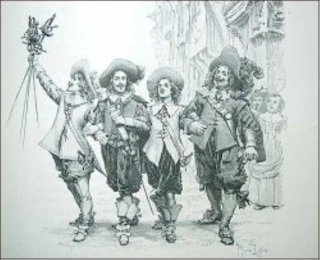
Book Review: Three Men in a Boat (To say nothing of the dog)


Three Men in a Boat is a light-hearted novel narrating an interesting series of incidents involving the author and his two friends. Written by the noted writer and novelist, Jerome K Jerome, the novel has its central story based on a journey in a boat on the River Thames in England, hence the title. Interspersed with the central narrative are interesting anecdotes, fanciful observations and a mild parody of the conservatism of 19th century British society.

Three friends tired of the mundane routine of life decide on a boat trip along the Thames to reinvigorate them. The novel revolves around the trip and the often humorous discussions of the three about the incidents of everyday life and their exchanging anecdotes with each other. It is a fairly accurate snapshot of British society at the end of the 19th century.

The full title of the novel is “Three men in a boat (To say nothing of the dog)”. The dog being Montmorency, Jerome’s pet fox terrier. The jokes and humor are timeless nearly a century later and appeal to readers even today. The carefree nature of the author and his friends as they focus on the lighter side of his life is also a reason for its timeless appeal.

Jerome Klapka Jerome was born in May 2, 1959 to Jerome C Jerome, a parson and a non-conformist preacher. He spent his early years in relative poverty. Growing up, he tried his skills at acting with little success. He then tried his hand at writing articles and short plays. The novel "Three men in a boat" was published in 1889 about a fictitious outing in a boat with two of his friends. He died in 1927.

The book though did not find easy acceptance amongst the intellectuals of the time who looked with disdain at its excessively casual approach. How it struck a strong chord with the common public who liked its humorous and non-sentimental narrative and the witty anecdotes. The book was an instant success and is still in print.

Three men in a boat is one of the books which are meant for light-hearted reading and help take life a bit more casual. In 2003, the book was ranked #33 amongst the 100 greatest novels of all time by the British newspaper, The Guardian.

Download the novel at

http://www.gutenberg.org/etext/308 Read More

Rafflesia - The Largest Flower

Rafflesia is the largest flower in the natural world. The flower which reaches a diameter of nearly 1 meter can weigh 11 kgs. It is found in the forests of South East Asia in Sumatra, Borneo and Malaysia. Destruction of Habitat and illegal harvesting of this rare plant have greatly endangered this fascinating plant species

Rafflesia is a parasite i.e. it lives on other plants. The plant lives on the Tetrastigma vine.

The Rafflesia plant, though, does not have any identifiable plant features such as leaves, stem and roots. Besides, unlike ordinary plants, it does not contain chlorophyll, the pigment necessary for photosynthesis. Rafflesia grows on its hosts. The flower originates in a bud which emerges from the host plant.

The Rafflesia flower emits a foul smell that resembles rotting flesh. For this reason, it is also known as the corpse flower. The pungent smell attracts flies which feed on dead flesh. These insects pollinate the flowers.

Rafflesia has become a big driver for eco-tourism in South East Asia as hordes of tourists visit to look at this wonder of nature. Efforts are on to conserve this rare flower and preserve its environment.


Useful links : http://rafflesia-in-bloom.blogspot.com/
images source: http://www.earlham.edu Read More

The Hanging Gardens of Babylon

Famous as one of the seven wonders of the ancient world, the Hanging Gardens of Babylon have been the subject of legends. It is said that King Nebuchadnezzar built the fabled gardens to cheer up his wife Amyitis, a Medean princess. Hailing from a mountainous region, Amyitis probably found the arid terrain of Mesopotamia depressingly different from the green and forested land of her parents.

The “Hanging Gardens” were not literally hanging. The gardens were probably “overhanging” as in the case of a balcony or a terrace, hence their name. Ancient historians such as Strabo and Diodorus Siculus describe terraces which were filled with earth on which were planted trees of different kinds. It is said that giant screw pumps were used to lift water from the Euphrates River and water the gardens. The gardens are believed to have been destroyed during an earthquake in the first century A.D.

The gardens must have truly been a sight to behold in the arid and uneventful landscape of ancient Mesopotamia. They would have greatly added to the grandeur of Babylon, which the historian Herodotus said excelled in splendor all the cities in the known world.

image courtesy: commons.wikimedia.com

Read More

The Dugong - Gentle Giant of the River


The Dugong is an aquatic mammal that lives in the sea, usually in shallow areas such as channels, bays, etc. Dugongs can be found in many regions around the world. The largest population of about 85,000 can be found in Australia.

The Scientific name for the Dugong is Dugong dugon. Dugongs belong to the family Sirenia. This family of aquatic mammals also includes the manatee and the Stellar Sea Cow which was hunted to extinction in the 18th Century.

Dugongs can grow to nearly 11 feet in length and an adult dugong may weigh nearly 400 kilograms. The Females are usually larger than the males. Dugongs feed on sea grass which grows on the seabed. Because of this, they are sometimes referred to as “sea cows”. The forelimbs of the dugongs are shaped like paddles. The dugong does not have hind limbs. Instead, it has a dolphin-like tail which helps the dugong in moving forward. Using these paddle-shaped front limbs, the dugongs moves along the seabed in search of sea grass.

Dugongs are solitary animals and are usually seen alone. Sometimes, a mother can be seen with her calf. Calves are born after a pregnancy that lasts for 12 to 14 months. The bond between the mother and her calf is extremely strong. Calves stay with their mothers for many years before moving out on their own. Male Dugongs start to grow tusks between 12-15 years of age.

However today, these gentle creatures are threatened by destruction of their habitat, hunting and pollution. In many areas, hunting has greatly reduced the dugong population. The dugong is protected by laws in many countries. Dugongs have few natural enemies such as sharks, crocodiles and killer whales. They have been known to live upto 70 years in stable protected environments.

Read More

Stamp Collecting - The Hobby of fun and learning

Stamp collecting or Philately can be a rewarding and educative hobby. Postal Stamps from different countries of the world come with beautiful themes and images. Each postal stamps tells a story. Some commemorate a leader, other stamps celebrate the founding of an institution such as a school or college while others celebrate a nation's wildlife. Collecting stamps and learning about the theme they are based on gives a great deal of knowledge about people, historical incidents, places. etc


The term philately is derived from two Greek words philos, meaning love and atelia, which means without tax, an apparent reference to the stamp which enabled a letter or a parcel to be sent to an address a great distance away without being levied en route. Today philatelists are found throughout the world coming from diverse occupations such as doctors, lawyers, teachers, policemen and many students

A brief history of Stamps

The idea of stamps was first conceived by Rowland Hill, who suggested stamps as part of his proposal to reform the British Postal System. The first stamp was released in 1840. Nicknamed the Penny Black, it contained an elegant engraving of the then reigning British Monarch, Queen Victoria. The introduction of stamps simplified the postal system and made sending and receiving letters much easier and simpler.

Following Britain, other countries too released their own stamps. Today, almost all countries issue their own postage stamps with the name of the country and the monetary denomination printed in the stamp. Incidentally, stamps from Great Britain do not mention the name of the country.

Starting your Hobby
Philately as a hobby is relatively inexpensive to start. You can begin with collecting used stamps from mail you receive from friends. You can also ask your friends and relatives for stamps they receive. Besides, you can also buy stamps from dealers. This is a faster way to develop a collection. It is good if you share your interest in stamps with your friends. It helps you to exchange stamps with them, helping your collection to be more diverse.

Setting up your collection
Most Philatelists maintain their collection in stamp albums. You can either use hinge based albums where stamps are attached to the pages of the albums by means of special adhesive hinges. Alternatively, strip albums with special slots where the stamps can be inserted are also available. It is good to handle stamps with special tweezers to avoid damaging the delicate edges during handling.

Stamp collections can be thematic i.e. based on a particular theme such as sports, railways, birds and so on. You can also have collections based on countries.

Mint Stamps and First Day Covers
Mint stamps are stamps which are purchased from the Postal Department through the the local post office or an official philatelic agency. These stamps are fresh unlike used stamps in the collection.

First Day Covers are issued by the Post office on the day of the stamps release. To increase visual appeal a special cancellation or logo is applied on the envelope.

Philatelic societies and bureaux
Joining a philatelic society is a great way of developing your hobby. Philatelic societies provide numerous resources for the stamp collector such as a stamp catalogues, newletters, information on upcoming stamp releases and above all the opportunity to interact with fellow collectors.

images courtesy: www.seasidebs.com

Related links:

History of Philately

my-philately.blogspot.com

http://francobollidelmondo.blogspot.com/2008/10/history-of-philately.html Read More

Esperanto - The Global Language

Esperanto is a language which was designed for international use. We say, designed, because unlike natural languages such as Greek, Latin and English, it did not evolve over centuries. Instead it is a planned language with a founder.

Esperanto was developed by L L Zamenhof, a Jewish doctor. Growing up in Warsaw, a multilingual society, Zamenhof became convinced that most international problems of his day would be resolved if only men had a common language.
He saw how racial and cultural differences were amplified by the use of different languages amongst people. Different languages hindered interaction and communication between people, giving rise to ignorance, suspicion and eventual conflict.

Zamenhof sought to develop a simple language which could be learned easily and which could be used internationally. Since, the language would not be connected to any region, country or people, everyone could identify with it. Zamenhof began working on it when he was just a junior in high school. He was finally ready to unveil his new language to the world when he was just 27 in the year 1887.

The language gained popularity with a relatively small time. Numerous periodicals were started to popularize the language. The First congress of Esperanto speakers was held in 1905 in France. These conferences are conducted annually. The conference for 2008 was conducted in Rotterdam in the Netherlands.

While it has not become the international language, its founder imagined, the language has been in continuous use for over a century. Though no country has adopted the language for official use, there are about one thousand native speakers of the language. Besides, about two million people are believed to be fluent in the language. Esperanto is also widely used in correspondence, radio and TV shows and in conventions.


There are 28 letters in Esperanto. The letters are mostly derived from the Latin alphabet. They are

a b c ĉ d e f g ĝ h ĥ i j ĵ k l m n o p r s ŝ t u ŭ v z

Some common expressions in Esperanto are

Hello: Saluton

What is your name?: Kiel vi nomiĝas?

My name is...: Mi nomiĝas...

How much (is it/are they)?: Kiom (estas)?

Here you are: Jen /jen/

Do you speak Esperanto?: Ĉu vi parolas Esperanton?

Read More

The Varangian Guard


The Varangian Guard was an elite band of bodyguards who protected the Byzantine Emperors. Composed mainly of Vikings, who served as mercenaries in the Byzantine military,
the guard was noted for its loyalty to the Emperor and its perceived aloofness from the political intrigues of the palace. Lacking confidence in his native Byzantine guards whose loyalty he did not fully trust, the Emperor Basil II raised the Varangian Guard to serve as his bodyguards.

The word Varangian is said to have originated from the word ‘var’ which could mean an oath or a pledge, a reference to the guards as warriors who promise to protect. Besides their function as bodyguards of the emperor, the Varangians were also charged with other duties such as the investigation of treason and conspiracies. As bodyguards, they accompanied the emperor during his public appearances and also performed a ceremonial role. The Guard was initially, composed mostly of Scandinavians. However, after the Norman invasion of Britain, Anglo-Saxons were inducted too.

Apart from their primary role as protectors of the Emperor, the Varangian Guard was also deployed in critical battles where the Varangians were known for their ferocity and ruthlessness. The weapon of choice for the Varangians was a long axe. They also appear to have been skilled as swordsmen and archers. Their loyalty coupled with their martial prowess made them an elite body of troops who were both feared and respected.

Since their chief role was in defending the person of the Emperor, the Varangians were stationed around Constantinople. During the Sacking of Constantinople during the Fourth Crusade, they were the only unit in the Byzantine to offer any significant resistance to the pillaging crusaders. The Guard was disbanded shortly the city was captured in 1204.
Read More

Tips for Attending Interviews

All of us face interviews at some stage in life. Be it an interview for a college admission or an interview for a job, interviews understandably tend to make us nervous. The tension and pressure to get the job or an admission cause your hormones to go into overdrive. The result – sweaty palms and stuttering responses. Nervousness and anxiety, though normal physiological responses of the body, prevent us from showcasing the best we have in front of the interviewer.

However, adequate preparation for the interview and keeping a few simple instructions in mind can greatly reduce your apprehension and anxiety and make you present your winsome best to the other side.

Prepare in advance
How you prepare for an interview is as important as how you attend it. It is good to prepare for the interview at least a week in advance. Learn about the company and the job profile. Talk to people dealing with the company such as customers and suppliers.

Gather the documents necessary for the interview
Collect the certificates, testimonials and experience certificates that you may feel necessary for the interview. It is advisable to take a set of photocopies with you when you go there.

Plan on how you would respond to common questions
Think about probable questions and how you would answer them. For instance, most interviewers for a job would ask the candidate the reasons for leaving the present job. If your resume has anything that may not be in your favour such as a disability, a wrong brush with the law, etc., decide on how you would convey it to the interviewers. Gaps in your career history, if any, need to be explained.

Find out how to reach the venue in time.
Few things can be more stressful for the interviewee than getting stuck up in traffic or being unable to locate the venue on the day of the interview. Learn about the venue and ask friends on the best way to reach it. Discuss alternate ways as well, in case of a traffic jam or a transport strike.

Decide on what you are going to wear.
It is good to select your dress in advance. You choice of dressing tells a lot about your personality. Dress for the position you have applied for, not for the position you are currently in. Always have another set of clothes ready should you spill your coffee during breakfast at home.

Reach the site in advance
Plan to arrive at the site at least 30 minutes in advance. This will give you time to settle down into your new environment. Use the washroom if you want.

Attending the interview
When you are ushered into the interview room, remember to greet the interviewers before you sit down. Maintain an erect posture, leaning slightly towards the interview panel so as show interest. Answer the questions calmly. Your answers should reflect a depth of knowledge in the job profile, the company and its products. If you do not know an answer, politely say that you do not know. Do not try to guess; this may indicate an unreliable personality.

Make sure your words are clear and audible. If you feel nervous, ask for a glass of water. Interviewers generally anticipate their candidates to be nervous. They can understand.

After the interview is over, thank the interviewers individually. Remember to take back all your documents when you leave.

Follow – Up
Contact the company a week later to find out the outcome of the interview. If you have been selected, discuss the modalities of joining. If the outcome had been unfavourable, thank them for the opportunity. It is good to ask them for feedback so that you can improve your performance next time. Read More

Mustafa Kemal Ataturk (1881-1938)

Name: Mustafa Kemal

Honorific Title: Ataturk

Best Known As:

  • The Founder of the modern Republic of Turkey

  • A Renowned statesman, reformer and political thinker

Birth and Death:

  • Born May 19, 1881 in Salonika (modern day Thessaloniki), Greece.

  • Died November 10, 1938 in Istanbul, Turkey.

Overview:

Mustafa Kemal Ataturk is considered to be the founder of the Republic of Turkey. Ataturk is remembered as a military hero, reformer, political thinker and a visionary who founded the modern Republic of Turkey from the ruins of the Ottoman Empire.

Early Life and Education:

Ataturk was born in Salonika (modern day Thessaloniki), Greece. His father was a government official in the Ottoman Empire. At the age of 12, he was sent to Military school and then to the Military Academy, Istanbul from where he would graduate as a lieutenant in 1905.

Career:

After graduating from the Military Academy in Istanbul, Ataturk was assigned to a military unit in Damascus. In the following years, he participated in the campaigns against the Italians in Libya and in the Balkans war. He earned great acclaim during the Dardanelles campaign of the First World War, where the Ottoman Turkish forces repulsed the disastrous Allied landings on the beaches of Gallipoli. The stiff Turkish resistance, eventually, forced the Allies to withdraw. The role of Ataturk during this crucial event in the war made him a national hero and earned him his reputation as a courageous and capable commander and acclaim, even amongst the Allies, for his brilliant military tactics.

The First World War ended with the victory of the Allied Powers over the Ottoman Empire. Turkey came under Allied occupation and the Allies drew up plans to partition the Ottoman Empire.

Turkish resentment over the occupation provided a fertile ground for the growth of Turkish Nationalism. The Turkish National Movement was born, in which Ataturk played a leading role. The Turkish War of Independence, which soon followed, led to the birth of the Turkish Republic in 1923. Ataturk was proclaimed the first President.

Ataturk’s Reforms:

Ataturk established the Turkish Republic on his ideology known as Kemalism. Ataturk envisioned a modern republic that was progressive and secular.

Ataturk believed that one of the chief reasons for the defeat of the Ottoman Empire during the First World War was its regressive social and cultural mindset. Soon after assuming the presidency, Ataturk abolished the Ottoman Caliphate and instituted a series of reforms.

He theorized that Turkey can attain the level of European nations only by adopting the customs, education and laws of the West. Towards this end, he launched sweeping reforms on the political, economic, legal and cultural spheres.

Ataturk laid great stress on education and launched numerous literacy campaigns. Ataturk replaced the traditional script of the Turkish language with a simpler Latinized script. A firm believer in women’s rights, he gave voting rights to women. This was a revolutionary step considering the fact that even women in many European countries did not have voting rights at the time.

He also introduced changes in the dress code, law and in the calendar. He encouraged Turks to abandon the oriental dresses of the Ottoman Empire and to switch over to Western attire. All religious institutions linked to the state were abolished and the secular nature of the state was emphasized.

Legacy and Death:

Ataturk is considered to be a visionary, reformer and a great statesman. He advocated a pacifist foreign policy that worked towards world peace and forged peace treaties with neighboring countries.

Mustafa Kemal Ataturk died in Istanbul on November 10, 1938. He is buried in the Ataturk Mausoleum in Ankara, Turkey – a revered national monument.

Read More

rafflesia-in-bloom: Biology and Conservation of Rafflesia

rafflesia-in-bloom: Biology and Conservation of Rafflesia Read More

Budgies as Pets

Budgies are beautiful birds that make nice pets. They require relatively less maintenance and therefore are ideal for beginners. These lovely birds are intelligent, extremely social and bond well with humans. With training they can be taught a variety of tricks.

The budgie or budgerigar is a native of Australia. They belong to the parrot family.. The scientific name of the budgie is Melopsittacus undulatus. The natural habitat of the budgie is arid, semi-desert. Budgies, like other members of the parrot family tend to live in large colonies. Their diet consists chiefly of seeds.

Buying your Budgies

Budgies can be bought from almost all pet shops. It is important to check that the shops maintain the birds in good and hygienic conditions. See that the birds are active and healthy. It is good to buy the birds in pairs as they will bond. Most pet shops will put your budgies in a box for the journey home. Ensure that the box has adequate means of ventilation.

Setting up the Bird Cage

A good cage for your budgies should be at least 18 x 18 x 20 inches. Wire cages would be ideal as the birds will be able to climb the sides. Alternatively, if you are using cages with metal bars, ensure that the bars are horizontal to enable climbing. Provide adequate perches for the budgies. Ensure that the cage provides enough space for the budgies to fly from one perch to another so that they can exercise their wings.

Budgies are very inquisitive and active creatures that require a lot of stimulation. Hence, it is good to provide toys such as plastic rings, small balls, etc for the birds to play with. The cages need to be kept away from direct sunlight. The cage must also have a removable litter tray to enable cleaning the cage without opening the cage.

Feeding and Diet

Budgies have a diet that consists mainly of seeds. You can occasionally treat your budgie to a meal of fresh fruits. However, certain foods such as avocado, lemon, and potato, chocolate can be harmful to your budgie. Besides their base diet of seeds and occasional fruits, budgies may require supplements of substances such as calcium to augment their dietary intake. This is particularly true of female budgies who need more calcium to form the egg shells. Cuttlebone, which is available at almost all pet stores is a good source of calcium.

Besides food, a permanent supply of clean drinking water should always be made available. It is recommended to replace the water every day as budgies sometimes tend to dirty the water.

Breeding

Budgies can be bred as soon as they attain sexual maturity at around 8 months. In budgies, it is possible to visually tell apart the sexes by the color of the ceres, located below the nostrils. The males have blue ceres while the females tend to have pink or brown ceres.

For the birds to mate, they must bond with each other. Bonding occurs when the birds start feeding and preening each other. The female budgie lays a clutch of about 4-5 eggs with an interval of a day between each egg. The female then sits on the eggs during the incubation period of around 18 days.

The chicks are born naked and blind. Both male and female birds share the responsibility of raising the chicks. The chicks grow fast and are completely covered by feathers by the end of one month after which they leave the nest.

Budgies are beautiful birds that are easy to care for. They are also highly social and are ideal for beginners. They bond well with people and are easily handled.

image courtesy: http://www.petsworld.co.uk/budgies.htm Read More

Amelia Earhart – Aviator and Pioneer

Amelia Earhart was a pioneer in the field of Aviation. She achieved fame and acclaim as the first women to make a solo flight across the Atlantic. She made many other achievements in the field of aviation.Earhart’s distinguished career was tragically cut short when she mysteriously disappeared while attempting to make a flight around the globe. Her remarkable story and her legacy in the field of aviation endure to this day.

Amelia was born in 1897 in Kansas, USA. Drawn to flying from a young age, she saved money and took flying lessons, determined to live out her love for aviation. She soon managed to buy an airplane and in the following years made many achievements in aviation, including the first solo transcontinental flight and won recognition by performing many aviation feats.

In 1932, Earhart became the first women to fly solo across the Atlantic, five years after Charles Lindbergh made the first solo flight across the Atlantic. Starting from Newfoundland, she flew across and landed in Londonderry, Ireland.
Three years later in 1935, she scaled another height when she became the first person to fly solo across the Pacific Ocean from Honolulu to California.

In the United States, Earhart soon became an icon. She was awarded the Distinguished Flying Cross by the Congress of the United States and received many other awards. Earhart also made great effort to popularize aviation. She was amongst the first people who tried to develop commercial aviation. The first flight service between New York and Washington DC was set up, thanks in part to her efforts and investment. She also went on to hold important positions in the fledgling airline industry.

In 1936, Earhart made plans for a flight around the world. She chose to circle the globe along the longest path – along the equator with a navigator, Fred Noonan. Her first attempt had to be abandoned due to technical problems. She started again a few months later from Miami. She arrived at Lae, New Guinea on 29th June 1937, having covered over 22,000 miles. She, now, had to cover the remaining 7,000 miles over the Pacific.

The next day, Earhart took off from Lae. Her planned landing was to be at Howland Island, a small island just a few miles long. The US Coast Guard vessel, the USGSC Itasca was stationed to coordinate the landing. Earhart and her navigator, Fred Noonan were able to make radio contact with the USGSC Itasca. Soon, communication with the aircraft was lost. What happened next remains unclear. The Coast Guard vessel initially received messages from Earhart’s plane. But, the aircraft was unable to receive messages sent from the ship.

Suddenly, all contact with the plane was lost. Desperate attempts were made by radio operators across the pacific to contact Earhart, but, in vain. The US Navy made an exhaustive search and rescue operation in the Pacific to rescue her. However, no trace of the plane and its pilot could be found.

The life of a brave young woman had come to a tragic end. Over the years, many theories would emerge about Earhart and her disappearance. Some claimed that Earhart managed to land her plane on a remote, uninhabited island but died shortly afterwards. Other claimed that she was taken prisoner by the Japanese, an enemy of the United States during the time, and was executed along with her navigator, Noonan.

However, no conclusion could be reached on what happened to Amelia Earhart. Amelia Earhart was a pioneering woman who achieved remarkable things in her life and made contribution to the field of aviation. She was seen as a symbol of women’s achievement. Her accomplishments were admirable, given the time she lived in. She remains an inspiration through her achievement and her career.
Read More

Amnesty International - advocating Human rights around the World

Amnesty International is a human rights organization based in England. It was founded in 1961 by a British lawyer called Peter Benenson. Benenson was moved by a case of two Portuguese students who had been sentenced to 7 years imprisonment during the Spanish Civil War. The incident motivated him to start a movement that would highlight such human rights violation and campaign against injustice. Amnesty International was thus born.

Today, the organization is a global movement which campaigns for human rights. It has campaigned on a wide of human rights issues such as people jailed for their political views, violence against women, torture and arms control.


The organization is present in about 150 countries around the world and has about 1.8 million members. The organization adopts many methods of campaigning to get its message across to the public, politicians and decision makers. Public demonstrations, writing letters to leaders and conducting awareness campaigns are some of the methods used by Amnesty International in its campaigns.

Another method which Amnesty International uses is the mobilization of volunteer activists – people who volunteer to work for Amnesty International. Volunteers help in creating awareness about violations amongst the general public. In addition, the organization works with lawyers, journalists and people who can influence public and government opinion. They also work with the governments of various countries to bring change in government policy and to get political prisoners released.

Amnesty International is campaigning against the death penalty, which it says, is a cruel and degrading form of punishment. It has advocated the cause of refugees who are displaced from their home due to war or natural calamities. Besides, it is currently campaigning against child soldiers – the hundreds of children who are forced to join terrorist organizations and other armed groups.

The organization does not accept money or other help from any government. It raises money from its members and supporters. Amnesty International is governed by an International council consisting of representatives from all the countries where it has a presence.

Amnesty International was awarded the Nobel Prize in 1977, in recognition of its efforts in the cause of human rights.

To know about Amnesty International visit their website at
http://www.amnesty.org/


Read More